





Now in Practice: September 2026
Welcome back to Now in Practice. One throughline in this month’s release is the timing and detail behind how complex care makes it into the record. Diagnoses organized and refined while the clinician is still in the note. Related conditions grouped together so combination codes can surface before the chart closes. Cues that capture what was discussed during an inpatient stay while the story is still fresh.
So much of what often comes back weeks later as a retrospective query was known in the moment, and each of these updates is a version of the same goal: settling that detail at the point of care so the record reflects the full complexity of the care delivered and holds up on review. Alongside them, two updates give administrators more direct control over their Abridge implementation, and two specialty model enhancements now capture the details that define allergy and palliative care.
Closing CDI gaps before the chart reaches coding
Three capabilities in this release are focused on closing the gap between the care delivered and the care that is documented: the diagnosis that’s accurate but not specific enough, the combination code split across a flat list, and the observation made at the bedside that never reaches the note.
This builds on Abridge’s Query Engine, introduced in July, which surfaces AAPC-compliant CDI queries inline in the note when a documentation gap is present. This month extends the same idea to the diagnosis list itself and to the smaller details of an inpatient stay, where a formal query would be heavier than the detail warrants.
Visit Dx Integration Enhancements
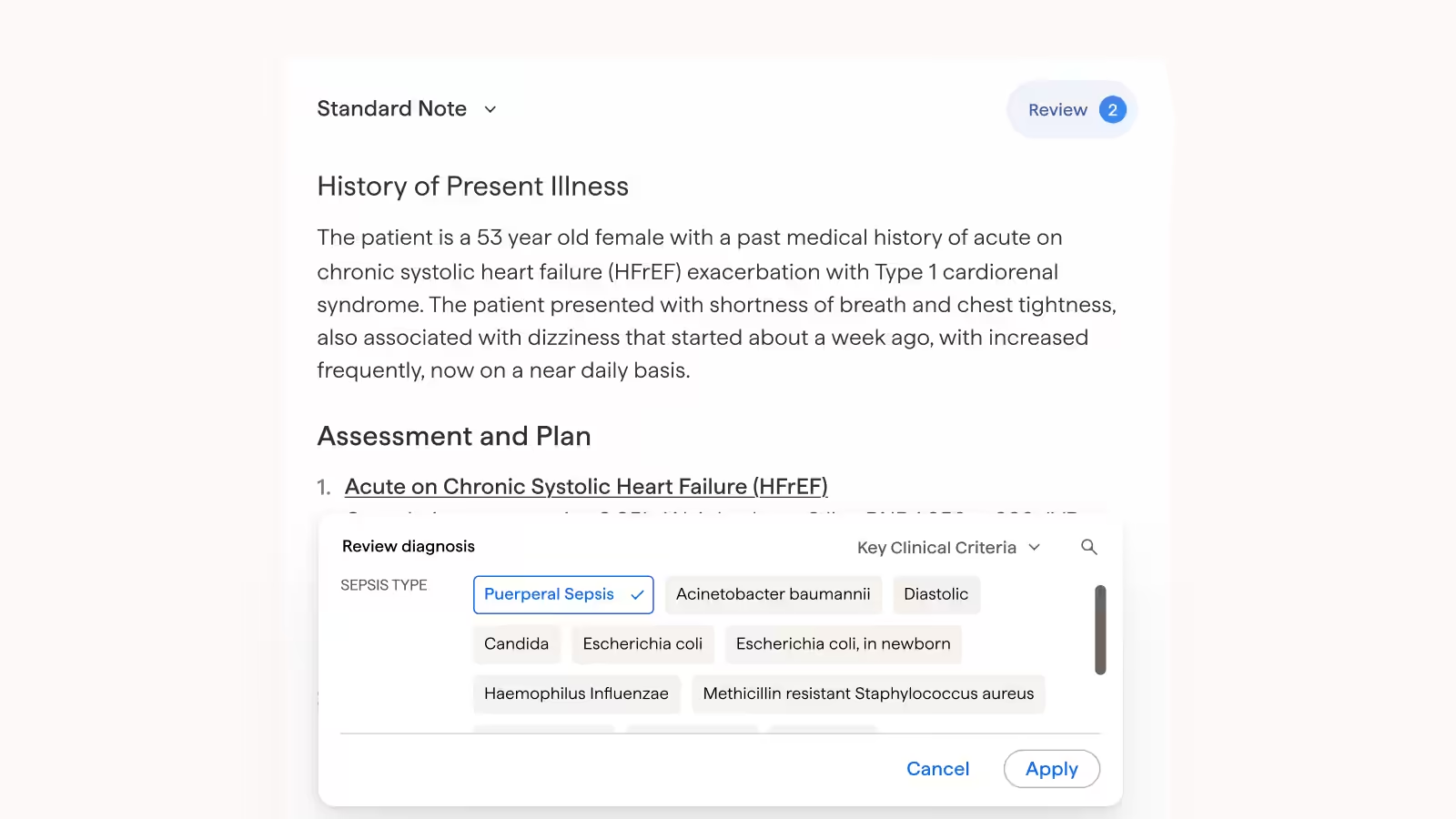
Our Visit Dx integration now brings problem headers, diagnosis search, and specificity options together in a single place, within the documentation workflow. Diagnoses can be organized under the right headers, found or replaced inline, and refined to a more specific option when the modifier detail is available, all without stepping out of the note. The goal is an accurate diagnosis list that’s settled during documentation, rather than days or weeks later when a review or query flags what’s missing.
Problem Grouping
Abridge now groups related diagnoses on the problem list into logical clusters, organized the way clinicians reason about a patient rather than as a flat list. With related conditions side by side, combination codes are easier to spot for review while the clinician is still in the note. A combination code split across a flat list is exactly the kind of gap retrospective review exists to reconstruct; catching it at the source means the case mix reflects the complexity of the patients actually treated.
Query Engine: Inpatient Cues
While clinicians chart an inpatient stay, Abridge now surfaces non-blocking cues that point to care already discussed or assessed: whether wounds were present when skin integrity was checked on admission, or the key decisions from a goals-of-care conversation. Each cue carries its supporting evidence and can be acted on or dismissed in one step. Because the prompt arrives while the context is still fresh, the full complexity of the care makes it into the chart, and clinicians can have more confidence that nothing was left out.
Cued, not interrupted. The instinct with any documentation prompt is to make it impossible to ignore. But a prompt that blocks signature teaches clinicians to click through it, and once that habit forms, the prompts that matter get the same treatment as the ones that don’t. Cues are dismissible because the clinician is the one who knows whether a detail belongs in the record, which is also what makes every acted-on cue meaningful.
More control for the teams running Abridge
As implementations scale across care settings, it becomes more important than ever for the teams administering Abridge to be able to manage access on their own timeline and verify the work the platform does on their behalf. Two updates this month give project and CDI teams more direct control over their Abridge implementation.
Self-Serve User Management
Partners can now add, edit, and remove user access directly from the Enterprise Portal, with users across surfaces visible in one place. For Abridge Inside, an optional approval queue routes clinician access requests to admins to approve or deny, replacing manual updates to the Epic Ambient Allowlist for organizations looking to centralize Abridge access. Every hire, role change, and departure can be handled as it happens. It’s a direct response to partner feedback: the time between a staffing change and a clinician’s working account shouldn’t depend on someone else’s queue.
.avif)
QA Viewer for Query Engine Logs
CDI teams can now open any Query Engine query in the QA Viewer and see its full record alongside the clinical note: the documentation gap it surfaced, the evidence behind it, the compliance rationale, and how the clinician responded. Instead of re-checking every query by hand, reviewers can spot-check the engine’s judgment case by case and build confidence in the routine layer of query work, so their time goes to the complex cases that need real judgment.
Deeper detail for specialty care
Every specialty has terminology and details that a general note structure may not be tuned to surface. Two recent note enhancements capture what matters most in allergy/immunology and palliative care.
Allergy/Immunology Model Enhancement
Allergy/Immunology notes now record allergens, triggers, and reaction timelines exactly as discussed, so a peanut allergy stays a peanut allergy. The HPI captures medications by name, dose, and device along with prior skin prick and IgE results, and the plan carries immunotherapy schedules and dosing. In allergy care, the specific allergen and the timing of a reaction are the clinical picture, and the note should carry them that way.
Palliative Model Enhancement
The palliative note now generates a dedicated Goals of Care subsection in the HPI, with a corresponding summary of action steps in the Assessment & Plan. The note also improves capture of medication dosages and changes, including MEDD and pain pump settings, along with palliative-specific scores like the Palliative Performance Scale (PPS). Goals-of-care conversations are often the most consequential part of a palliative visit, and they deserve a place in the note that matches their weight.
This month’s release is about the record keeping pace with the care. A diagnosis is refined before the note is signed, a combination code surfaces while the clinician can still act on it, and what was observed at the bedside reaches the chart while the story is fresh. Behind the note, admins manage access on their own timeline and CDI teams can see exactly why each query was raised. That’s what we shipped in September, and we’d love to have you see it in practice.