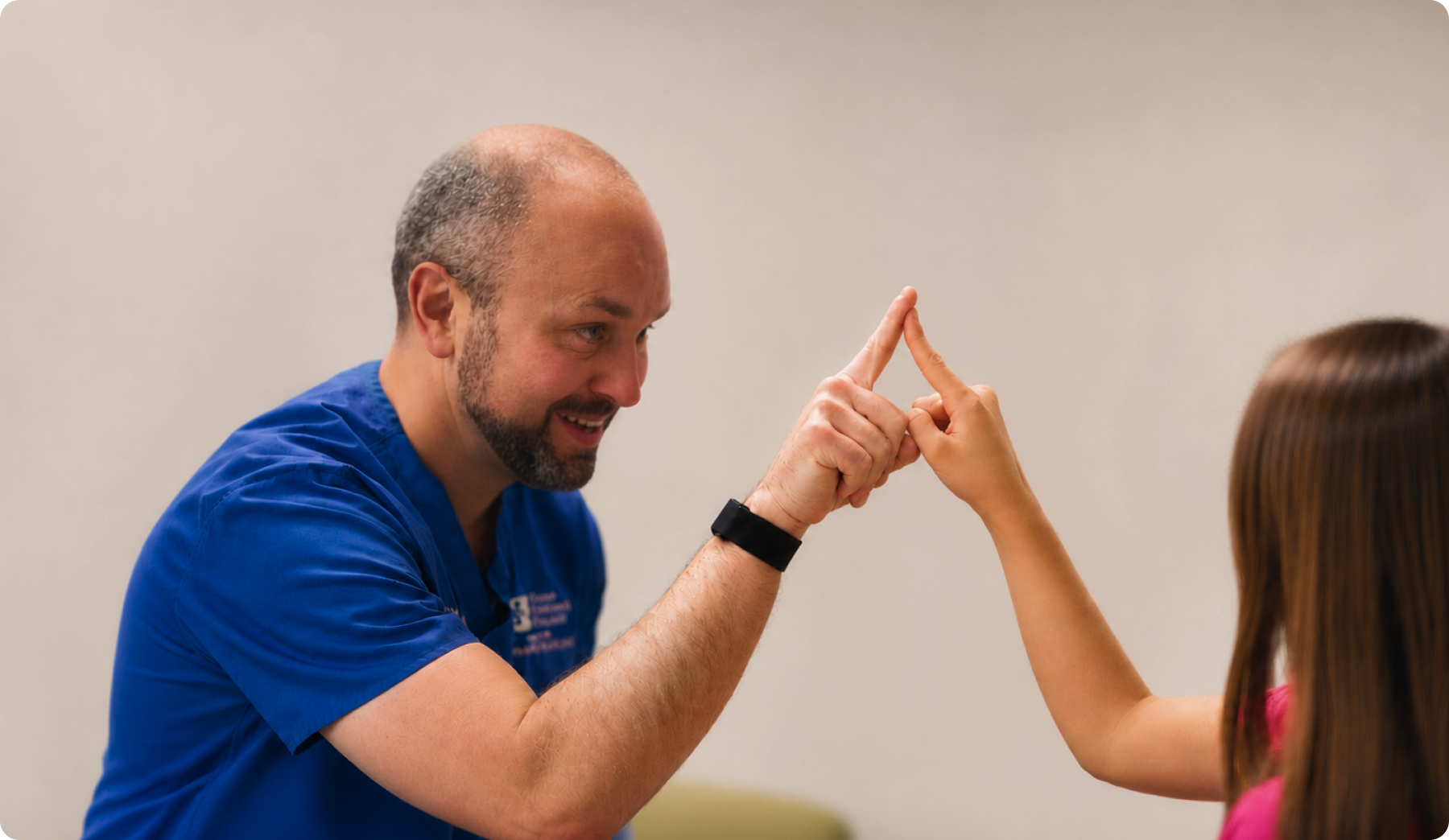




Healthcare is presence.
Twenty years ago, the Institute of Medicine introduced the concept of a Learning Health System: a system that continuously improves, so the right information gets to the right care team member at the right moment. A system that uses what it learns from caring for one patient to take better care of the next.
It’s been twenty years. We talk about it every single year. Have we made real progress?
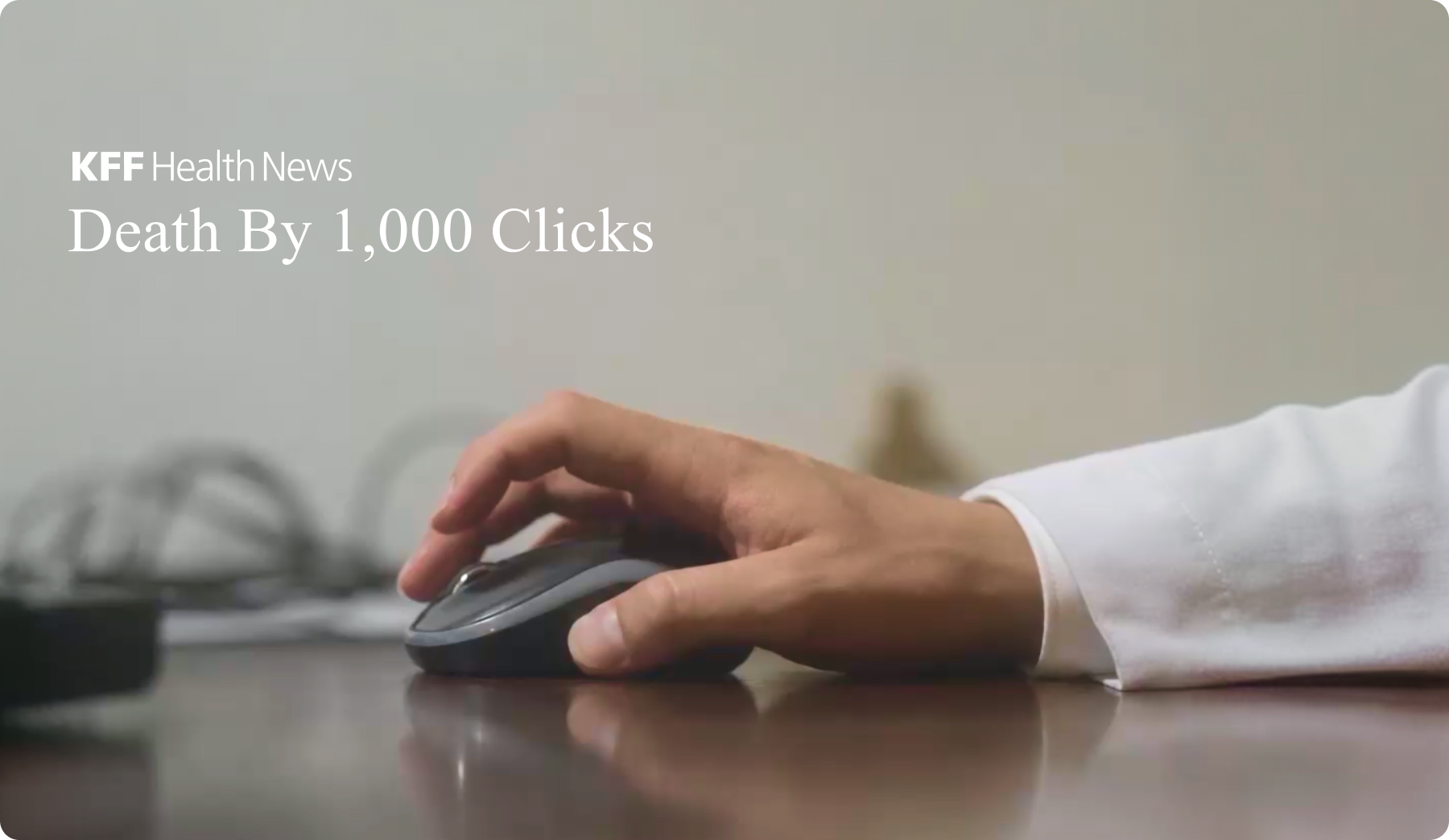
A few years ago, the Kaiser Family Foundation published a piece called “Death by a Thousand Clicks.” It described emergency medicine clinicians clicking 4,000 times to get through a single shift, and the patient experience suffering because of that split attention. Every clinician knows what that feels like. You’re with a patient, but part of your attention is somewhere else.
Tens of billions of dollars have been invested over the last decade into health tech companies, big and small. We should be asking what that investment has changed for the people giving and receiving care.
Meanwhile, many of us today are embracing personal AI assistants in our own lives. My wife and I are in a group text thread with one. It manages homework for the kids, plans our meals, even shops for us. It’s become something like a chief of staff for our family, helping us get things done that would otherwise take our time and attention.
I think about what that could mean in the hospital.
I was on call the weekend of October 3. Much of my inpatient work involved what we sometimes call a “chart biopsy”: digging through records to reconstruct a patient’s history, understand what had happened, and figure out what needed to happen next.
I couldn’t help but wonder: what if I had a fellow available around the clock who could review the chart, present the patient, offer evidence-based recommendations, and help coordinate the care?

I wouldn’t need to give that fellow a perfectly organized list of instructions. I could explain what I was trying to accomplish, share my concerns, and ask for help. They would turn that into a plan, figure out what could happen in parallel, follow up on what was still outstanding, and come back to me when they needed my judgment.
That’s the kind of help I want from an AI assistant.
Years ago at Abridge, we started with a thesis around the conversation. That patients and their care teams constitute the core unit of value exchange, and that starting there would allow us to rethink the entire system. Today, we partner with more than 300 health systems and support more than 140 million encounters every year. We’ve built products that help with documentation, clinical decisions, orders, and coding. We’re now extending that work into the front office and back office.
We know what you’re thinking. That can feel like more build, more analyst time, more cost. What if they could access all of those capabilities through one assistant? One that can listen, read, write, speak, see, and use a computer on our behalf. One that understands the patient’s context across fragmented systems and can carry work through to completion, bringing us back in when it needs our judgment.
Think about a patient whose care spans several days, multiple health systems (including the VA). The work might include entering data into a registry or a clinical trial management system, calling the inpatient pharmacy to get medications ready, navigating to a payer portal to get authorization for a life saving medication, and scheduling follow-up testing and an outpatient visit.
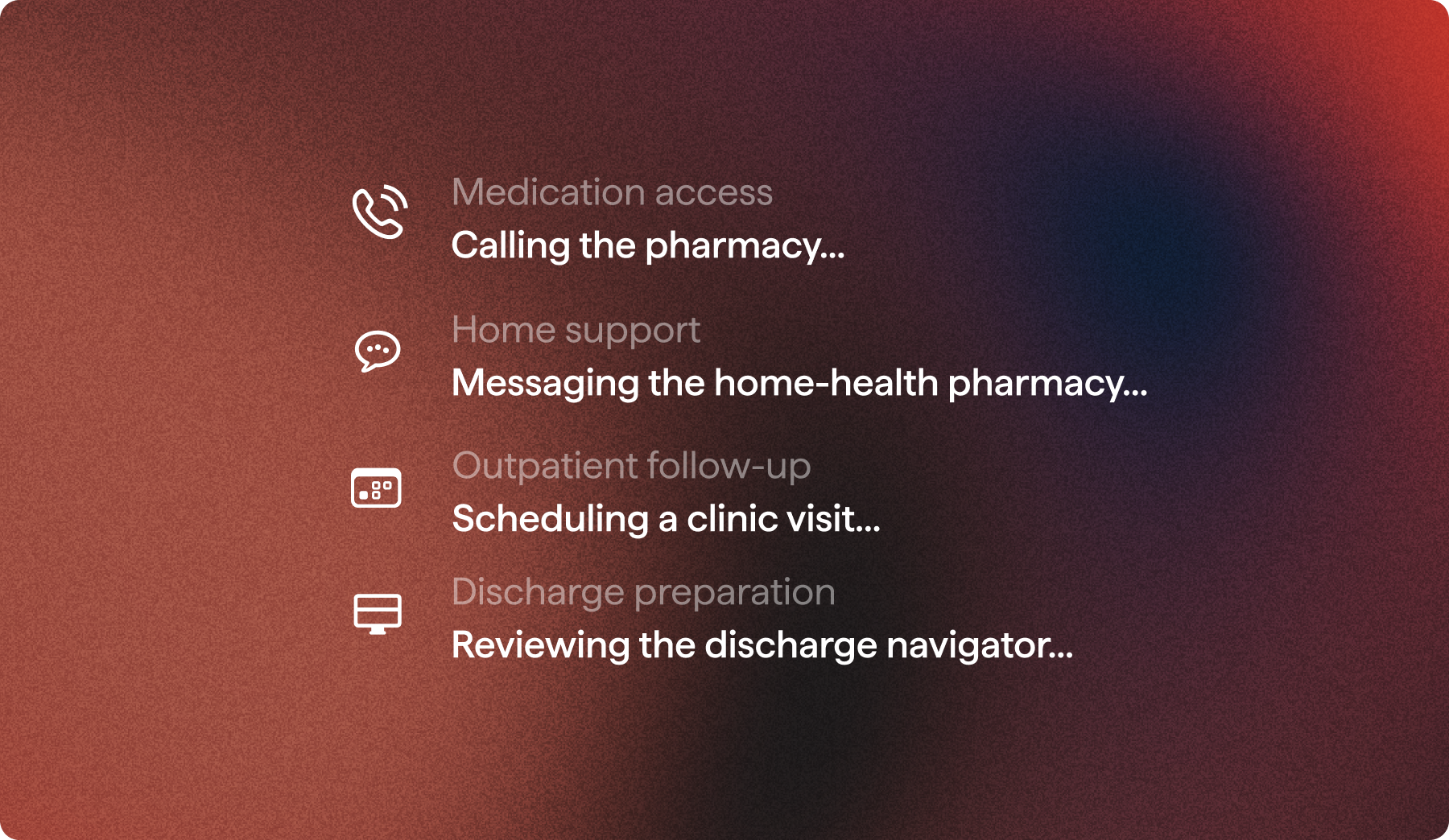
An assistant needs to keep track of all of that. It needs to know what has been completed, what is waiting on someone else, and what still needs attention. If a request is denied or a phone call goes unanswered, it needs to recognize that the work is still unfinished.
That also changes how we evaluate these systems.
As AI takes more actions on our behalf, we need to be able to examine how the work got done. What information did the assistant use? Did it complete every step correctly? Did it know when to bring someone in? After it clicked submit, did the payer actually receive the request?
Our partners should be able to follow that work in real time, inspect the record, and see where something needs their attention. That visibility needs to be part of the product.
This is what we’ve been building at Abridge, and what we had an opportunity to demo recently at our annual customer event, The Conversation, in San Diego. The experience is live in early environments with a few select partners.
We’re building toward a future where everyone has an enterprise-grade healthcare assistant working around the clock, coordinating work across the infrastructure that exists today, and helping them deliver better care.
For me, the purpose comes back to presence. When I’m with a patient, I want to listen, think, and give them my full attention. I want to understand their history and make the best decisions with them, informed by the latest evidence, the care pathways at my hospital, and what matters to them. And I want to know that the plan we make together will be carried through—from the orders and authorizations to the medications and follow-up.
The Learning Health System we’ve been talking about for twenty years will be an AI-native health system. We think this is how it begins.