



ROI from Scaling Abridge Across 50+ Specialties in Rural Communities
About WVU Medicine
- HeadquarterSMorgantown, WV
- # OF clinicians4,000+
- # OF annual visits5.6+ million
- communities servedWest Virginia, Pennsylvania, Ohio, and Maryland
In rural West Virginia and across the Appalachian region, when a clinician burns out and decides to retire early, there is often no immediate replacement. This means patients lose access to crucial local healthcare services and may have to travel long distances in search of care.
WVU Medicine knows this reality intimately. As a multi-state health system anchored in predominantly rural communities, keeping clinicians focused on patients instead of paperwork is critical for retaining and growing the healthcare workforce and maintaining access.
Faced with rising documentation burden, WVU Medicine deployed Abridge’s enterprise-grade AI platform for clinical conversations across its hospitals and clinics. The goal was straightforward: reduce the administrative load weighing on clinicians and restore time and energy to patient care.
The results exceeded expectations. Adoption spread rapidly and organically across specialties and care settings through clinician-to-clinician advocacy. Within months, what began as a modest pilot has grown into one of the health system's most widely embraced technology initiatives.
Key Results
With Abridge, clinicians at WVU Medicine have seen:
77%
reported increased satisfaction at work
43%
increase in ability to accommodate urgent patients
30%
reduction on in-room scribe reliance
Clinician Demand Drives Rapid Adoption
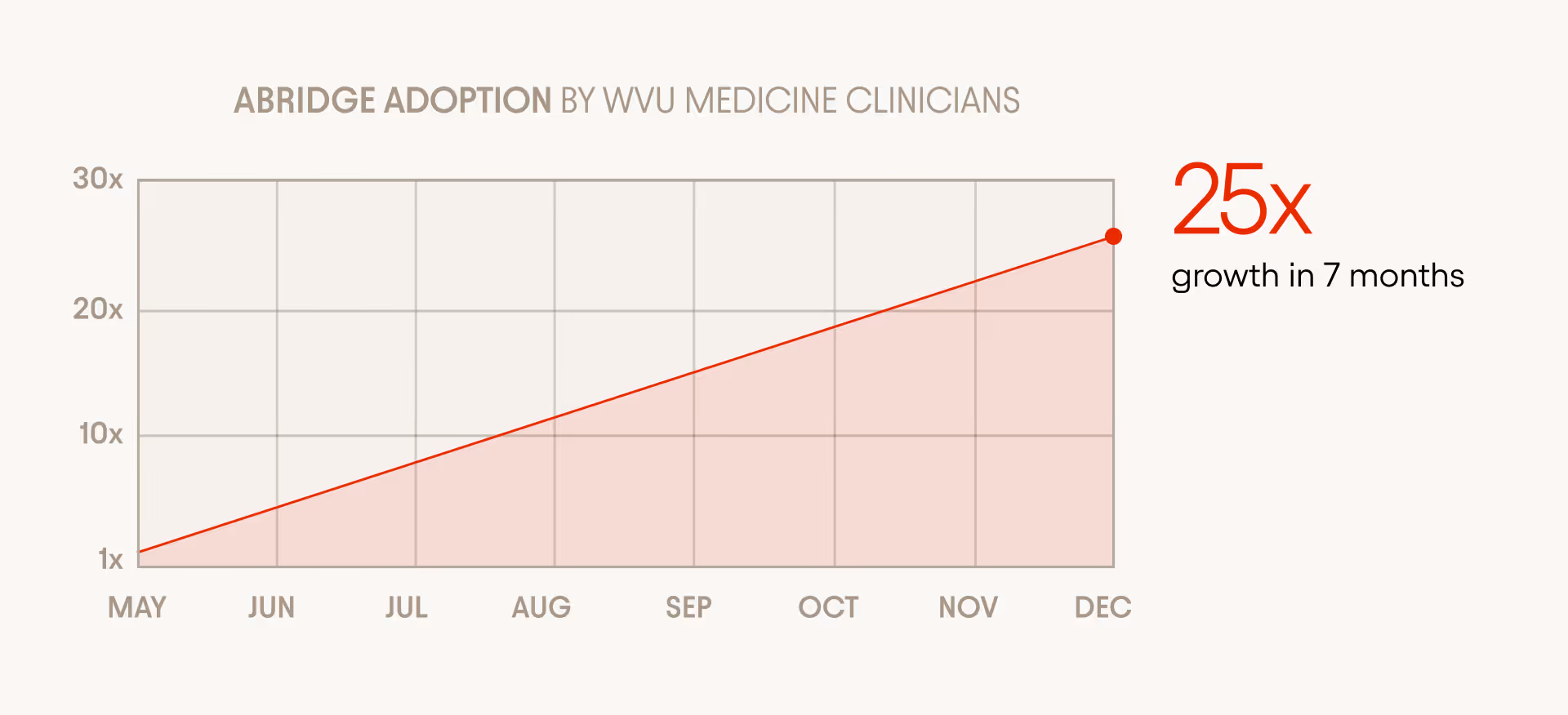
WVU Medicine went live with Abridge in May 2025. Initial deployment began with a small group of clinicians, but adoption accelerated rapidly as clinicians began recommending the technology to their peers.
Rather than through mandates or internal marketing campaigns, growth was largely driven by clinician word-of-mouth. Within months, hundreds of clinicians had adopted the platform, and by the end of the year the system had provisioned approximately 1,500 users, with over 1,000 recording at least once.
Adoption Spreads Across Care Settings
As adoption grew, Abridge usage expanded quickly across multiple care settings throughout WVU Medicine. Clinicians began incorporating Abridge’s enterprise-grade AI platform into a wide range of workflows, including ambulatory visits, emergency department encounters, and inpatient care.
Usage increased steadily across each of these settings as clinicians in over 50 specialties adopted the platform in their daily practice, including orthopedic surgery, hematology and oncology, obstetrics and gynecology, cardiology, and more.
Within months, documentation volume grew dramatically across the health system, reflecting both increasing clinician adoption and the ability of AI-drafted clinical documentation to support diverse clinical workflows.


“Abridge has been excellent for me as an ED physician. I’ve cut the time I spend on notes by more than half and finish nearly all of them before leaving work. It’s made a major difference in my wellness.”

“As a pediatrician, the well-child formatting has been awesome…Overall, I love the product.”

“Abridge makes primary care more fluid. Our encounters often span unrelated diagnoses; this helps capture details that used to be missed.”
Reducing Documentation Burden and Clinician Burnout
WVU Medicine evaluated clinician experience using pre- and post-implementation surveys. Among 215 clinicians who completed matched surveys within the first 6 months of implementation, the health system observed meaningful reductions in documentation burden and burnout.
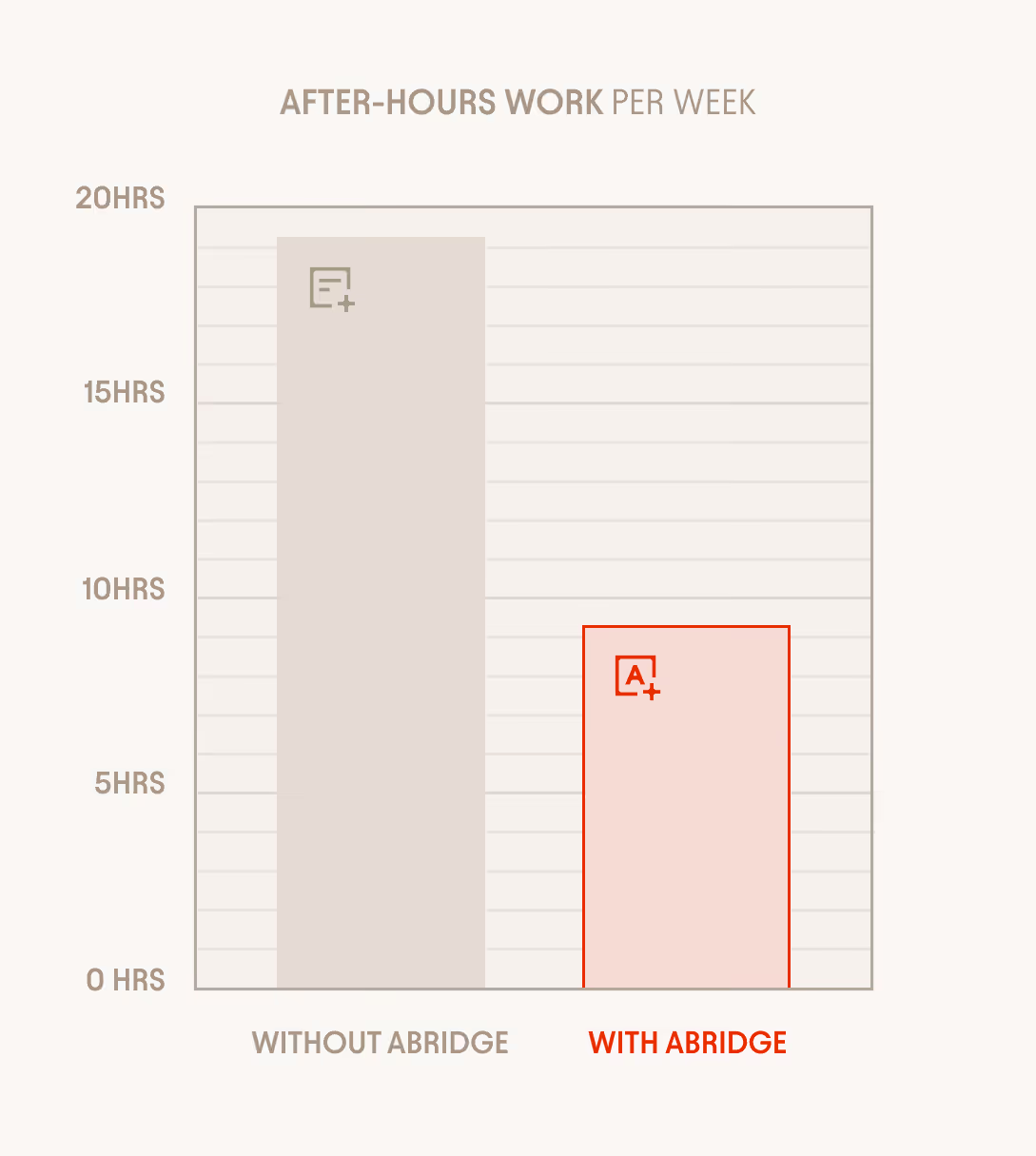
Clinicians also reported significant reductions in work performed after clinic hours. Average self-reported documentation work outside scheduled hours decreased from 19.1 hours per week to 9.2 hours:

“For years before Abridge, I stayed late to finish charting and/or preparing for a significantly heavy upcoming day of clinic. Abridge has taken late nights in the office and turned them into early dinners with my family. The stress reduction of this platform is palpable, real, and trusted.”
Helping to Sustain Rural Patient Access
For WVU Medicine, clinician sustainability is closely linked to patient access. Reducing documentation burden helps clinicians remain in practice longer and manage their schedules more efficiently.
increase in clinicians’ ability to accommodate at least one additional urgent patient during a clinic session

“Abridge has changed my life. I used to see at least 15 less patients in urgent care due to documentation. With Abridge, I work faster, more effectively, and I never worry about getting done at work on time. I would recommend this to any new grad working in any specialty because it allows you to focus on learning and patient care without the dread of documentation. I can do more procedures, see more patients, and work harder since using this platform.”

“I’ve been extremely pleased with Abridge. Working in an urgent care setting with consistently high patient volumes, I’ve seen a significant improvement in my efficiency. Even during solo shifts, I feel far less overwhelmed and exhausted. I’ve also noticed reduced wait times for patients, as I’m spending less time on documentation and more time providing care. I’m able to manage my workload effectively and still leave clinic on time, which has greatly improved my overall quality of life. This is an exceptional and highly impressive platform.”
Operational Efficiency Without Workforce Disruption
Prior to deploying Abridge, WVU Medicine spent approximately $4 million annually on human in-room scribes. Within the first six months of deployment, reliance on in-room scribes declined by more than 30% as many scribes moved on to training pathways for clinical careers, such as medical or physician assistant programs.

“As adoption increased, we were able to reduce our reliance on in-room scribes through natural attrition, without layoffs. That shift allowed us to manage resources more responsibly while improving the experience for both clinicians and patients.”
This approach reflects WVU Medicine’s broader commitment to workforce development. By creating new career pathways for staff, the health system is turning an operational shift into a long-term investment in its people and the future of care delivery across the region.
More Present Clinicians, Better Patient Conversations
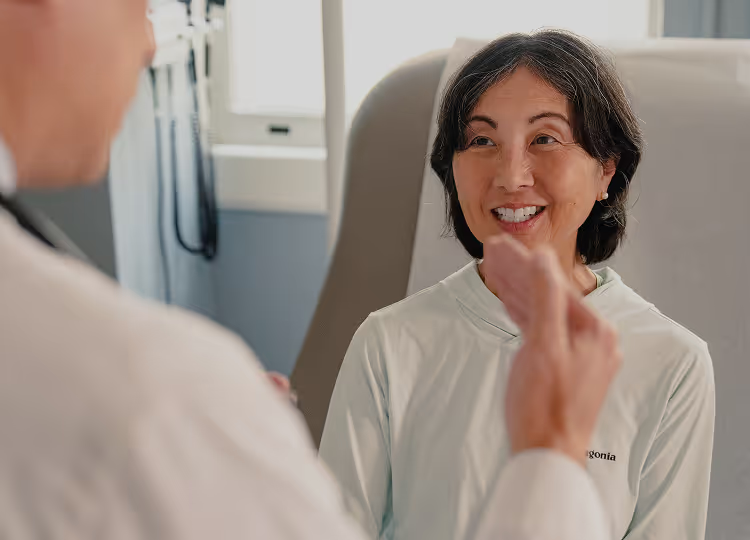
Abridge’s enterprise-grade AI platform for clinical conversations also changes the dynamics of the patient visit by operating in the background. Rather than staring at a computer screen, clinicians can maintain eye contact and focus more fully on conversations with patients.
While medical scribes remain an important part of many care teams, clinical documentation drafted by AI provides another option for supporting clinicians while preserving the privacy of patient-clinician interactions.

"I can look at and listen to my patients during the encounter—Abridge is a gift and a game changer.”
Supporting the Long-Term Sustainability of the Rural Healthcare Workforce
For WVU Medicine, deploying Abridge’s enterprise-grade AI platform is not just about improving workflows—it is about sustaining access to care across a largely rural region. By reducing documentation burden and improving operational efficiency, the health system is helping clinicians manage their workloads more sustainably while continuing to serve the communities that rely on them.
“We’ve heard providers say this technology will extend their careers. That kind of feedback matters, particularly in rural and critical access settings where losing even one clinician can have an immediate impact on care availability.” — Dr. David Rich, CMIO
In rural healthcare, even small improvements in clinician capacity can have an outsized impact on patient access. WVU Medicine’s experience shows how technologies that support clinician sustainability can strengthen the long-term resilience of the healthcare workforce.

“Abridge has been life-changing. I no longer spend time outside my scheduled hours documenting. I actually look forward to my shifts.”


