



From Competitive Pilot to Strategic Partner: How University Hospitals Chose Abridge
With Dr. Crystal Mosca, ACMIO, University Hospitals
After a rigorous, data-driven evaluation, University Hospitals selected Abridge as its strategic, long-term partner for enterprise-grade AI for clinical conversations.
Overview
University Hospitals’ evaluation process included a head-to-head pilot with formal evaluation scorecards, clinicians testing both solutions, and executive review.
In choosing Abridge, leaders cited strong clinician preference, a responsive and collaborative partnership model with weekly team meetings, and alignment on the future roadmap as key differentiators.
Reducing documentation burden to give clinicians more time with patients, increasing visit capacity without mandating higher volumes, and strengthening clinician retention all signal the start of a broader transformation at a time when ambient technology is quickly becoming table stakes.
In this candid conversation, Dr. Crystal Mosca, Associate Chief Medical Information Officer, reflects on University Hospitals’ rigorous evaluation process, clinician response during the pilot, early performance outcomes, and how Abridge is supporting long-term innovation across the care continuum.
How did you approach the ambient AI pilot and evaluation process?
When we did this pilot, we actually went into it with two different vendors.
Clinicians provided feedback through a formal survey at the beginning and the end of our official pilot period, which was a little over 90 days. We also elicited feedback by sending out emails midway through the pilot.
Our project team and Abridge’s implementation team met weekly throughout the entire project and we’re still doing that during our larger rollout phase.
We've had a direct feedback line to Abridge every step of the way, which is what made this project successful. And their willingness to do that helped us feel confident making a final decision on a vendor.
What were some of the other factors in your decision to select Abridge?
There were three big things that won the battle between the two [vendors]. First was the responsiveness of the vendor. I would say Abridge has been quick to respond to any questions and willing to meet with us anytime that we needed.
Second was our crossover group in our pilot that utilized both products. Not every pilot user did that, but we did have a subset of users, and every single one of them preferred Abridge. Some to the point where when we switched them to the other product, they asked to go back to Abridge. They didn't even want to finish out the pilot with the other vendor.
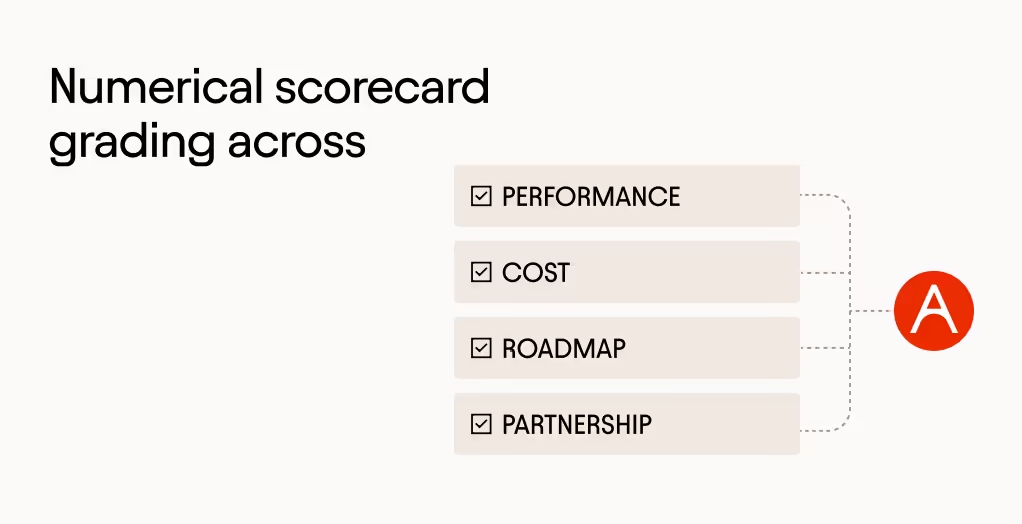
Third was our numerical evaluation. We graded both vendors on a 1 to 5 scale on a list of factors including efficiency data from the pilot group, feedback on the platform, roadmap, cost, performance and vendor relationship and calculated a final score. There were a lot of details that went into the final decision. The score card is something our end user computing and technical teams have done with other products in the past and we borrowed that tool in our decision making for ambient AI.
What was some of the feedback you received from clinicians during the pilot?
The initial responses we got were things like: “You saved my marriage” or “This changed my life,” and “I'm actually going home on time.”
We had one clinician say to us: “I went to dinner one night, and my kids said, “How come you get to come and eat with us, and you're not working?” This was the kind of stuff we were hearing every day, and it was amazing to hear the impact of a technology on provider’s real lives.
I would love to share a quote we received mid-way through the pilot from a pediatric orthopedic surgeon, a very busy clinician, one of the leaders in her area, and it was really fun to hear her joy:
“There is not enough space in any email for me to tell you how much I have appreciated and benefited from the use of Abridge. This has been the most life-changing addition to my practice since I started in medicine 20 years ago. It has improved my efficiency, improved the quality of my summaries/plans, and dramatically decreased the burden on my life outside of work. I am able to spend more time with my family and the mental stress reduction is immeasurable. THANK YOU for making my life so much better. I have a new enthusiasm for patient care that had been waning because of the burden of note writing in clinic, and it's really nice to like that part of my job again.”
Did you get feedback from patients as well?
We did have some patients who—in their Press Ganey surveys—made comments that Abridge made their visit better and that the clinician was clearly focusing on them more. One of them was a clinician who's been with us for well over 20 years, and this patient had been with her for over a decade, and the patient said, “This was the best visit I've ever had.”
Did any of the feedback to the pilot surprise you?
We had generally good responses from every group that piloted ambient AI, but it was best in our primary care space. Our other top users were orthopedics and sports medicine. They did phenomenal with AI and I didn’t necessarily guess they would be a top user. We did see some challenges in spaces that have very specifically structured notes, but as the ambient products mature, I believe we may capture more of those users as well.
When presenting the business case to leadership, how did you frame the long-term value of this investment?
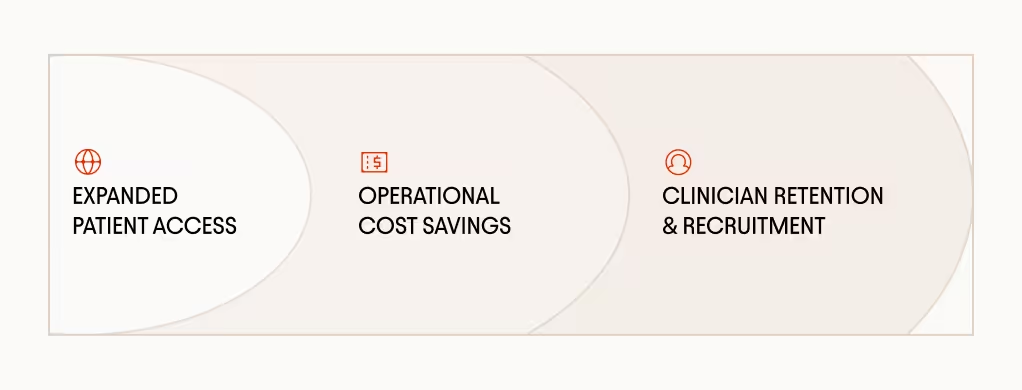
With the help of Abridge, clinicians are seeing more patients, and we didn't ask them to see more patients. We never made that a requirement to use the platform, it happened naturally.
The second was our utilization of scribes. We have about 80 clinicians who use a human scribe and the cost of scribes versus ambient technology is massively different. We were able to find quite a bit of savings through that transition, and both our clinicians and operational leaders were on board with that change.
Clinician retention and recruitment was also a key factor in our business case. During the pilot we had a couple of times where our clinical leadership would come and say, “We have a group of clinicians, very busy, who have an opportunity down the street, and they would get ambient AI down the street. Can we promise them ambient AI so they stay with us?” And we were able to accommodate. Ambient AI, as a whole, has become a standard offering for most organizations and we need to offer this to stay competitive.
What features are you looking forward to on Abridge’s product roadmap?
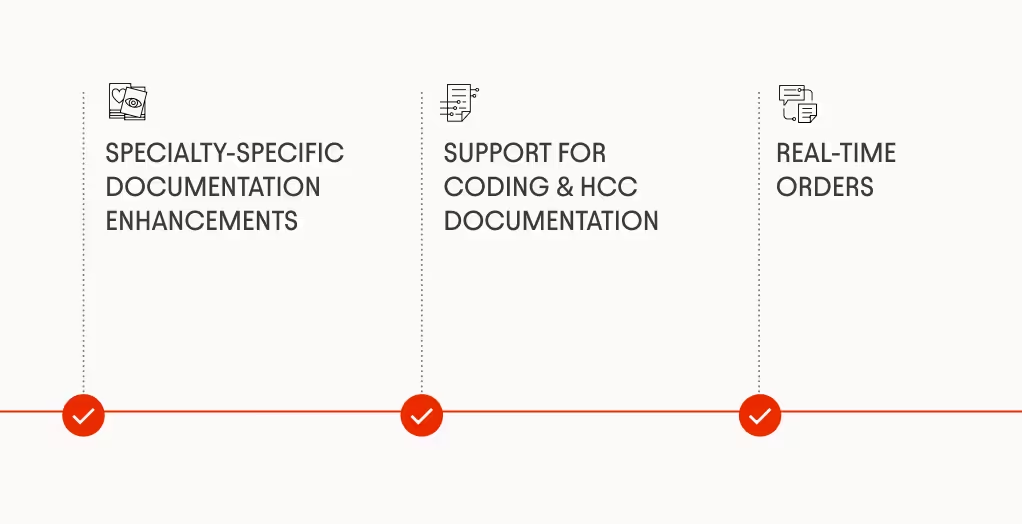
We're always looking for ways to make sure we're capturing codes, and especially Hierarchical Condition Category (HCC) documentation. That is on the roadmap, as well as dropping the diagnoses into the note directly rather than just being in text. That’s going to be a huge win.
When we started this project, our team would ask pilot users, “What do you wish this tool could do that it can’t do already?” The answer was almost universally: orders. “We want Abridge to queue up orders!” I was pleased that we got it at the end of our pilot. There were many cheers of joy, and it sounds like it is a feature that is going to improve even more. We have some clinicians who do not use a computer in the room, they walk in, they talk to the patient, they walk back out and place their orders. For that workflow, ambient orders are going to be incredibly helpful and time saving.
This interview was edited for length and clarity.